
Integrative Mental Health
 Your mind and body aren’t separate, so your care shouldn’t be either.
Traditional therapy focuses on thoughts, feelings, and behaviors, and that work matters. But many people do everything right in therapy and still feel anxious, exhausted, foggy, or stuck. Often that’s because something in the body is adding to the problem, and no one has looked for it yet.
Integrative mental health combines evidence-based therapy with a whole-body approach. Instead of only asking “How do we manage these symptoms?” we also ask “Why are these symptoms happening in the first place?”
 The Mind-Body Connection
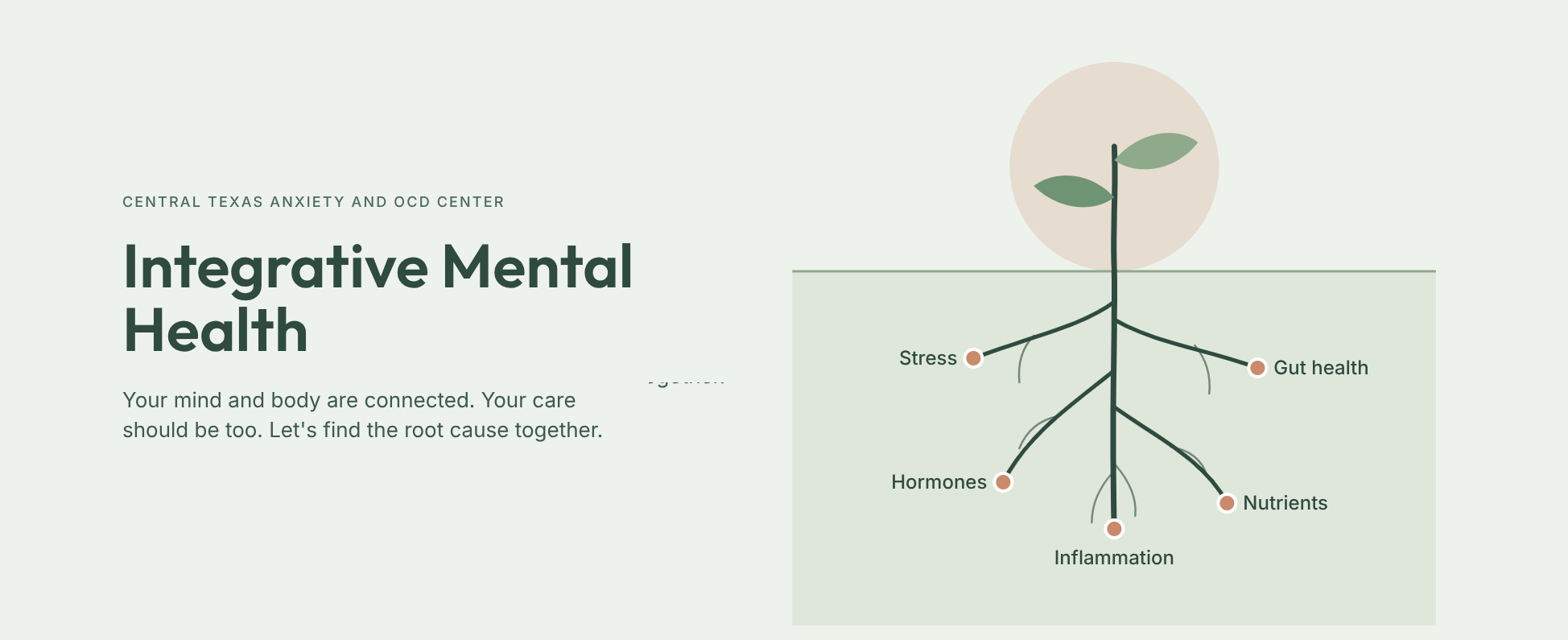
Research increasingly shows how closely physical health and mental health are linked. Some of the factors that can affect mood, anxiety, focus, and sleep:
- Gut health. The gut and brain are in constant communication. Most of the body’s serotonin is made in the gut. Imbalances such as yeast or bacterial overgrowth can affect how you feel and think.
- Stress hormones. Long-term stress can disrupt cortisol patterns. That can leave you feeling wired, anxious, or burned out, and it can disrupt your sleep.
- Thyroid and hormone balance. Thyroid and sex hormone imbalances can showup as anxiety, low mood, fatigue, or irritability.
- Nutrient levels. Vitamins and minerals such as B vitamins, vitamin D, magnesium, and zinc help the body make the neurotransmitters that regulate mood.
- Inflammation. Chronic inflammation, sometimes driven by food sensitivities or an imbalanced diet, is linked with depression and anxiety.
- Environmental exposures. Heavy metals and other toxins can place extra strain on the body and nervous system.
None of these replace the psychological side of anxiety or OCD. But when they’re out of balance, they can make it much harder to feel well, even with good therapy.

How Integrative Mental Health Works With Therapy
In Katherine’s practice, integrative health and therapy work together. You’ll keep doing the core work of therapy, such as CBT, ERP, or CBIT, tobuild skills, face fears, and change patterns. At the same time, you’ll look at what’s happening in your body and make targeted changes to support your nervous system.
Clients often find that when the body is better supported, the work in therapy feels more doable and the progress lasts longer.
What to Expect
- Consultation. We talk about your symptoms, history, and goals, and decide whether this approach is right for you.
- Comprehensive intake. We take a detailed look at your mental health, physical symptoms, sleep, diet, stress, and lifestyle.
- Functional lab testing. You complete the recommended at-home lab tests, and the kits ship directly to you.
- Results review. We go over your results together in plain language, so you understand what your body is telling you.
- Personalized plan. You get a plan that may include nutrition, supplementation, sleep, stress, and lifestyle changes alongside ongoing therapy.
- Ongoing support. We track your progress, adjust the plan as needed, and retest when appropriate.
Who This Approach Is For
This approach may be a good fit for adults, teens, and children who:
- Have tried therapy or medication and feel they’ve plateaued
- Have tics or OCD themes that are constantly changing despite working on them in therapy
- Have physical symptoms alongside anxiety or mood concerns, such as digestive issues, fatigue, headaches, brain fog, or trouble sleeping
- Want to understand the why behind their symptoms
- Are ready to make lifestyle changes as part of their care
- Stop fear from controlling your life.
What Integrative Mental Health Is Not
- It isn’t a replacement for medical care. Katherine doesn’t diagnose or treat medical conditions. Functional lab testing is used for wellness and lifestyle guidance, and she encourages clients to keep working with their physicians.
- It isn’t anti-medication. If you take psychiatric medication, you should keep doing so as prescribed. Any medication changes should only be made with your prescribing provider.
- It isn’t a quick fix. Lasting change takes time, consistency, and a willingness to do the work, in session and out.
Frequently Asked Questions
Do I have to do lab testing?
Functional lab testing is a core part of this approach, and it’s how we look for root causes. Katherine will recommend the tests that make the most sense for your situation.
Is lab testing covered by insurance?
Functional lab tests are typically paid out of pocket. (Some clients are able to use HSA/FSA funds.)
Can children do functional lab testing?
Most tests are appropriate for children and some are not. Katherine will recommend options based on your child’s age and needs.
How long until I see results?
It’s different for everyone. Many clients notice changes within a few weeks or months of starting their plan, but everybody is different.
Ready to Find Your Root Cause?
You don’t have to keep guessing why you feel the way you do. Book a consultation today to get started finding your root cause.
This information is for educational purposes and is not intended to diagnose, treat, cure, or prevent any disease. Integrative health services complement but do not replace care from your medical provider.